
Air Conditioners
 By HVAC.com•July 31, 2023
Sharing your quote takes less than a minute

Nearly 75% of all homes in America have air conditioning. As the National Oceanic and Atmospheric Administration records some of the hottest summer months in history, homeowners are turning to reliable home cooling systems for relief.
For some regions of the country, living without air conditioning would mean sticky, muggy days. Residents of Arizona, California, Colorado, Nevada, New Mexico, and Utah can spend much of their summer days in 90+ degree weather. Imagine not having the benefits of the best AC brand in that heat!
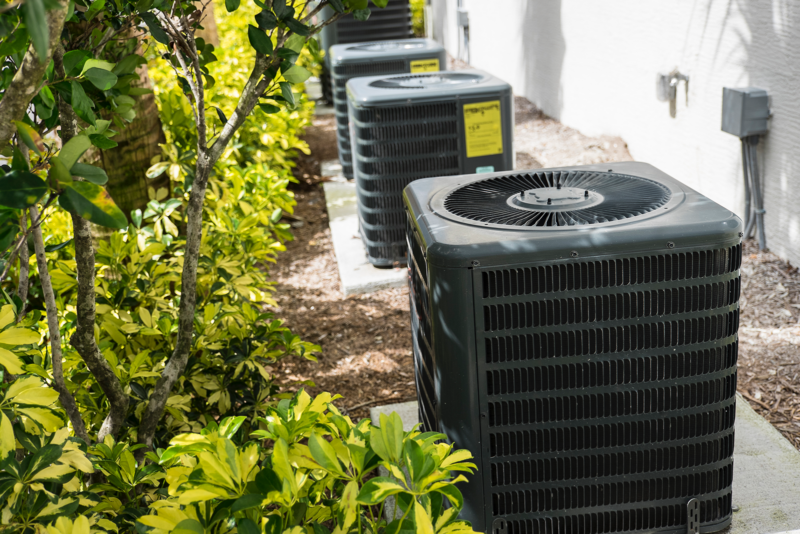
Even though we value the benefits of a good AC unit, how does it work? Which parts are essential for the cooling process? Are premium AC brands worth the up-front cost? How do I reduce my energy bills?
Air conditioning systems don’t have to be intimidating. When you understand the basics of how your home stays cool, you feel confident about scheduling routine maintenance and making the right investments for your family’s comfort.
Average Cost: $3,250 – $12,586
Like your home and needs, your HVAC project cost will be unique.
Air conditioning, or AC, is a modern marvel. The unit’s main job is to lower the air temperature and dehumidify the air. Most AC units cool the indoor air through a process called the refrigeration cycle. Some AC units use evaporation or free cooling to reduce the temperature of the room.
An air conditioner system is comprised of many components. Here we introduce the five major components used in all AC systems:
To understand where all of these parts are located, think of the entire AC unit as two coils: a cold coil and a hot coil.
On the cold side, or indoor unit of your system, the evaporator and a fan blow air over the cold coils. On the hot side, or outdoor unit of your system, there’s the compressor, condenser, and another fan. All three vent the hot air from the compressed refrigerant out of the room.
In between both sets of coils is an expansion valve, which regulates the amount of compressed liquid refrigerant moving into the evaporator.
When we enjoy the cool, crisp environment created by an air conditioner, it’s easy to think of the system cranking cool air into a room. An HVAC system, however, doesn’t produce cool air. It removes warm energy from the air in your home.
The thermodynamic cycle used by an HVAC system is called the refrigeration cycle. The process is a constant changing of the state and pressure of the system’s refrigerant, or coolant. Depending on its state, the refrigerant will absorb or release heat.
When the refrigerant is in the evaporator coil, or the cold coil, it absorbs the heat energy from the indoor air that passes over the coil. The refrigerant then travels to the hot coil, or outdoor unit, where it releases the warm energy and turns back into a cold liquid, and the process starts all over. The refrigerant will absorb and release the heat energy until your indoor air temperature is cooled to the thermostat setting.
Different types of air conditioners exist for different environments. A home in a mild climate, for example, likely won’t need the same AC system as a home in a dry, desert climate. Each system is useful for certain situations.
A split system air conditioner has an indoor and outdoor unit that are connected by tubing or piping. The two primary components that make up a split system can vary. Depending on your region’s climate and your home’s needs, you may have either an air conditioner or heat pump as the outdoor unit, partnered with either a fan coil or furnace installed inside your home.
The popular “ductless” air conditioning system is technically a split system that’s sometimes called a mini-split system. These ductless systems are easy to spot as they’ll have an outdoor component and one or more indoor units located in specific rooms. The indoor units are typically mounted on the ceiling or wall of a room. Mini-split systems are ideal for a home where varying temperatures are needed to maintain comfort in each space. The ductless system works solely through the fan installed inside the home.
A window air conditioner is designed to fit inside most windows. They are ideal for dorm rooms, apartments, or other small spaces. Portable air conditioners use the same principles of the refrigeration cycle, but in a tinier box. Blowers and fans move the cooled air into the room, while removing heat from the room. The refrigerant extracts heat from the air and simultaneously cools the air, making your room more comfortable.
Packaged units contain all the necessary components, but they are all located in one cabinet, like a much larger version of a window unit. Instead of splitting the cold side from the warm side, all the components are packaged together. The heating process is used through either natural gas or an electric heat lamp located inside the unit. Therefore, most packaged units don’t have an indoor furnace.
Packaged Terminal Air Conditioner (PTAC) units are also known as wall-split air conditioning systems. PTAC systems are a type of packaged air conditioner that is typically installed through the wall of a building, such as a hotel room, so the evaporator section and controls are located inside the space and the condensing coil is on the exterior side of the wall to project the heat from the space to the outdoor environment.
When it’s time to invest in a new HVAC system for your home, there are specific elements to consider. From the size of the unit to hiring the right HVAC company to install the new system, gather the information you need to make the best decision for your family’s comfort.
To ensure your unit will be installed correctly, hire an HVAC contractor to help you install a new AC system. When researching a quality HVAC contractor, take a look at their:
While the exact price will depend on the brand, installation fees, and other factors, it’s good to have an idea of the price to compare to quotes you receive.
A SEER rating is another component you should look for in your shopping experience. Think of SEER rating like you think of miles per gallon (MPG) on your car. Higher MPG means you spend less money on fuel. In the same way, a high SEER rating correlates with a more energy-efficient unit.
The rating is calculated by measuring the total BTU’s (British Thermal Unit) of heat removed per hour and dividing it by the watts of electricity used to remove that heat. The higher the SEER rating, the lower the lifetime energy cost. Even though units with higher SEER ratings cost more initially, they will save you more money over time.
Similar to the SEER rating, a high-quality compressor will increase the initial cost of your system but could offer higher energy efficiency. There are three types of AC compressors:
Most compressors offer one of two warranty options. You’re likely to find that the AC compressor warranty is good for either five years or 10 years. Some brands will allow you to extend the warranty if certain conditions are met.
Another variable to consider is the condenser fan motor, which is a part of the outdoor condensing unit. These fans keep the AC’s compressor from being overheated and cool the super-heated refrigerant that moved through the outdoor unit. As a core component of your air conditioner, the condenser fan should be inspected seasonally to prolong its lifespan.
As with the compressor, there are different types of condenser fan motors. For the best results when it comes to comfort and energy efficiency, your compressor and condenser fan should be the same model: single-stage, dual-stage, or variable-speed.
If quiet operation is a priority for your AC purchase, look for units that operate at or below 70 decibels (dB). Most units within that operational noise level have variable speed compressors, but some quality single- and dual-stage units are also available.
Most variable-speed models operate at 54-56 dB, which is the quietest option but likely the priciest. If you need to match your desire for silence with a budget-friendly model, look to the Goodman GSXC18 or Heil QuietComfort 16 HSA6.
Noise levels coming from AC units depend on:
Decrease AC’s noise level:
Refrigerants are the key ingredient to the air conditioning soup. They make air conditioning possible. In general, there are two major types of refrigerants for residential applications today:
R-410A refrigerant is the current standard. It contains no chlorine, which makes it ozone-friendly. This refrigerant has a higher pressure than Freon, and compressors that use R-410A have thicker metals to withstand the higher pressure needed to operate.
AC refrigerant type R-22, also known as Freon, is obsolete today. It cannot be produced in or shipped to the United States. It has been proven to have a negative effect on the environment, and was phased out of the HVAC industry beginning in 2010.
The HVAC.com team doesn’t have a favorite brand. Your best AC brand depends on your comfort needs, geographical location, and budget. That’s why we offer transparent brand reviews and unbiased recommendations.
One of the most important aspects of your new AC system is getting the right company to install the unit. Even if you purchase a top-of-the-line system, it won’t perform at full potential if it’s not installed properly.
Some of the most popular HVAC brands include Lennox, Trane, and Carrier, but we recommend that you focus first on finding a trustworthy local contractor who knows their brand so you don’t have to do the research.
Routine air conditioner maintenance should be performed twice a year, once in the spring and again in the fall. While you should hire an experienced technician to complete the seasonal inspections, there are steps you can take throughout the year to maintain your system.
Filters
HVAC filters are the most important part to maintain. You must routinely replace or clean filters. Most AC filters should be replaced every 60 to 90 days, but refer to the manufacturer’s guidelines for your specific unit.
Dirty filters will block the airflow in the system, reducing the system’s efficiency or causing the system to freeze up and stop working. Plus, if dirt in the ductwork gets directly into the evaporator coil, it could ipair the coil’s heat-absorbing capacity.
Coils
The two coils collect dirt all the time. If a coil is dirty, it will reduce the airflow and insulate the coil, which reduces its ability to absorb or reject heat. The cool evaporator coils and the hot condenser coils need cleaning on a yearly basis. Clean around the coils where debris and foliage can collect to allow for adequate airflow.
Coil fins
Coil fins are thin pieces of aluminum that cover the evaporator and condenser coils. They’re easy to bend and can block airflow if not straightened. Purchase a “fin comb” to comb the fins back into their original position and support proper air flow.
Condensate drain
The condensate drain line is connected to the indoor evaporator coil and allows moisture to drain properly from the unit. A soft wire brush or cleaning solution can be used to clean the line of any debris or mold.
Even with your routine home maintenance, a good HVAC technician is needed to perform more complicated inspections. The technician will:
The amazing combination of technology that makes up the air conditioning system allows us to live through the hot weather in comfort.
There’s a lot to learn about how air conditioners work, the benefits of certain types or brands, and proper maintenance techniques. The good news is that we don’t all have to be experts. HVAC.com offers a nationwide network of trusted local heating & air conditioning contractors who are pre-screened and available to help the next time your HVAC system starts to misbehave.
Sharing your quote takes less than a minute


